

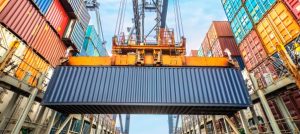
Photo: Contributed
By: Peneyambeko Jonas
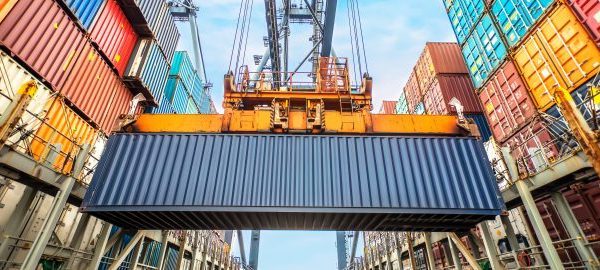
Namibia’s import bill continued to exceed its export earnings; in September 2026, the country recorded a merchandise trade deficit of N$4.7 billion as demand for imported goods remained high.
According to the Namibia Statistics Agency’s (NSA) September International Merchandise Trade Statistics Bulletin, exports stood at N$12.2 billion, down 3.4% from August, while imports increased by 2.1% to N$16.9 billion.
The deficit widened from N$3.9 billion in August to N$3.5 billion in September 2025.
Between January and September, Namibia exported goods worth N$103.5 billion, an increase of N$11.7 billion from the same period last year.
Imports reached N$138.8 billion, compared with N$109.2 billion in 2025.
For the month of September 2026, mining remained a major contributor to exports, generating N$6.2 billion during the month.
Manufacturing accounted for 44.9% of total exports, while agriculture, forestry and fishing contributed 4.2%.
Uranium was the largest exported commodity, earning N$3.39 billion, followed by non-monetary gold at N$1.37 billion and fish at N$1.12 billion. Nickel ores and concentrates generated N$736 million.
On the import side, petroleum oils accounted for N$2.16 billion, while sulphur and iron pyrites reached N$1.59 billion. Namibia also imported nickel ores worth N$747 million and mechanical handling equipment valued at N$598 million.
The figures highlight the country’s continued dependence on external markets for essential goods and industrial inputs.
Standard Bank Namibia Group Economist Helena Tunga Mboti has previously explained that Namibia’s position as a net importer exposes the economy to imported inflation, particularly through fuel, transport and energy costs.
This means international price increases can affect local businesses and household expenses.
The Namibia Chamber of Commerce and Industry (NCCI) chief executive officer Titus Nampala has also emphasised the importance of strengthening local supply chains and procurement.
Speaking at the China–Namibia Investment and Trade Fair in Windhoek, Nampala said: “Value is not found in exports alone; it is found in supply chains, in procurement, and in participation.”
He argued that local businesses should benefit more from economic activity rather than relying mainly on resource exports.
Independent Patriots for Change (IPC) Shadow Minister of International Relations and Trade Rodney Cloete has similarly highlighted the need to strengthen Namibia’s industrial capacity.
In an August 2026 statement on value addition, Cloete identified affordable and reliable electricity, financing, predictable inputs and engineering capacity as requirements for expanding manufacturing.
He warned that without these foundations, Namibia could struggle to turn its industrialisation targets into actual production and jobs.
Agriculture also presents opportunities for expanding local value. The Namibia Agricultural Union has previously stressed that much of the value in the meat industry is created at farm level through animal health, genetics and production standards.
In September, exports of bovine and bovine products reached N$323.3 million, while imports stood at N$6.5 million. However, monthly exports of bovine meat declined by N$125 million.
China remained Namibia’s largest export destination, receiving 36.2% of exports, while South Africa accounted for 19.6%. South Africa was also Namibia’s biggest import source at 30.7%, followed by China at 12.2%.
Namibia recorded a N$1.7 billion trade deficit with African countries, exporting N$5.4 billion worth of goods and importing N$7 billion.
The September figures show that increasing export earnings alone will not resolve the trade imbalance.
Expanding local manufacturing, agricultural production and value addition could help retain more economic value within the country, reduce reliance on imported goods and create opportunities for local businesses and workers.
penny@eaglefm.com.na