
Photo: oticki – stock.adobe.com
By: Nghiinomenwa-Vali Hangala
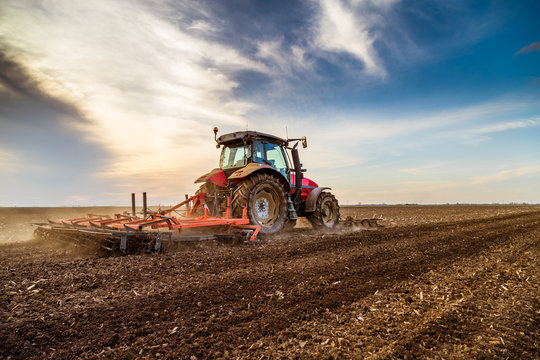
The government, through the Ministry of Finance, has confirmed that it is considering using its fiscal power through the tax regime to remove import VAT on agricultural inputs and machinery imports.
Namibia’s treasurer, Ericah Shafudah, confirmed it in Parliament this week, as she was questioned on the sensitivity of the Midterm review to the cost of living by other policymakers.
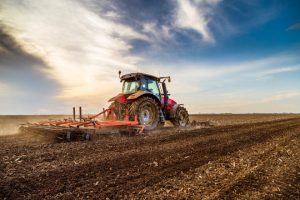
Shafudah informed fellow lawmakers that to provide relief in light of the high cost of living, fueled by increasing inflation, the government is considering the zero-rating of import VAT on agricultural inputs and equipment to lower the cost of producing food.
Agri-inflation, which is tracked by the Agricultural Union, keeps raising, driven mainly by higher operating costs, particularly animal health, feed, labour, machinery and maintenance expenses.
Farmers continue to face a severe cost–price squeeze, with production costs increasing by more than 60% between 2017 and 2025.
Namibian agriculture has become more capital-intensive with fertilizer, feed imports and high domestic electricity costs, preventing large-scale production.
Namibia is also highly vulnerable to the effects of climate change and naturally prone to recurring droughts that strain, which demand more de-riskig the agricultural sector from rain-fed production.
Prolonged dry spells, unpredictable rainfall patterns, and rising temperatures threaten Namibia’s agricultural production and the livelihoods of thousands of farming households, who depend on these resources for survival.
These climatic shocks have far-reaching consequences such as the reduction in crop yields, diminishing grazing pastures, and worsening the vulnerability of already food-insecure communities.
The Namibia Agronomic Board has called for various measures, including removal of import VAT on agricultural inputs and equipment, to lower the cost of production.
Agricultural inputs have not only affected private farmers but also government agricultural schemes, which are under-producing.
While small-scale farmers have cited the cost of fertilizer and timely supply as an impediment to consistent supply.
Namibia is a net importer of fertilizer and various agricultural machinery.
The government, through Shafudah, has disagreed with the sentiment that it is not funding agriculture adequately.
Shafudah told Parliament that lawmakers must not compare the N$1.5 billion budget for agriculture for this year with N$1.9 billion for international relations because it is misleading.
She said support for agriculture runs through several votes and entities.
Detailing that through Agribank, N$366.9 million is advanced to 544 clients between April and August 2026, including N$94.6 million to communal farmers.
Government also supports agriculture through NAMSIP with a N$1 billion AfDB loan, approved in 2017, with completion planned for December 2027.
As for water infrastructure, she said that it benefits from a N$1.9 billion AfDB loan approved in 2020, with completion planned for December 2027, and a N$1.5 billion KfW loan signed in 2025.
“Therefore, the allocation to the agriculture sector in Namibia extends beyond the numbers funded through the state revenue fund,” she stated.
On the N$40 million for procurement of grains by AMTA in preparation for the mooted El Niño, concerns were raised that AMTA would use the money for their operations.
She said AMTA has shared the record of farmers that have been paid over the last two weeks.
Regarding diversifying the country’s beef market, Shafudah noted the government has commenced bilateral trade negotiations with potential trading partners to explore opportunities for resumption of trade in livestock and livestock products.
She has, however, not disclosed the countries Namibia is talking to.
The treasurer also told the lawmakers that the reallocation of N$685 million from projects and offices is because they are not spending it.
“This is not money lost. It is funding that could not be spent within this financial year, redirected to where it can be spent now,” she stated.
This is to address under-execution.
erastus@thevillager.com.na