
Photo: Financial Times
By: Nghiinomenwa-vali Hangala
According to experts, decarbonising heavy industries is essential to achieving global climate goals, whilst simultaneously unlocking significant investment opportunities, despite complexity.
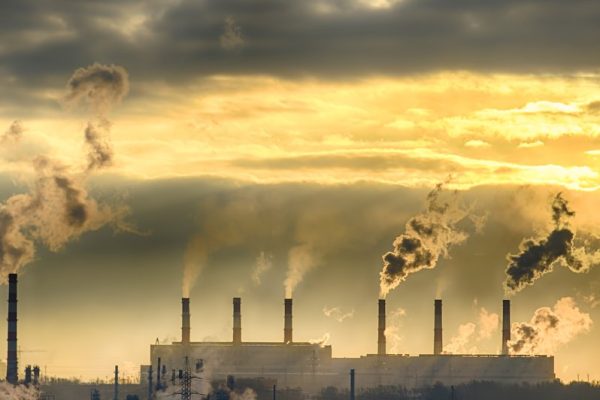
Heavy industries are considered the hardest to reduce their carbon emissions. They include the cement industry, steelmaking, aviation, and others.
Commenting on the approval of US$140 million for Namibia and South Africa Climate Fund Managers by the Green Climate Fund, Andrew Johnstone, Chief Executive Officer of the Fund, said decarbonising heavy industry will enable the globe to achieve some of its climate goals related to emissions.
At the same time, it also presents a new avenue for investing.
Johnstone stated that the aim is to direct capital, through innovative financing structures, into commercial investments designed to mitigate the causes of climate change and help societies adapt to the consequences of various economic activities.
He, however, acknowledged that it is complex and financially challenging to scale decarbonizing projects, particularly during development and construction.
To mitigate such scaling challenges due to financing risks, the Green Climate Fund (GCF)’s catalytic financing is deploying first-loss equity to turn decarbonizing projects into commercially viable projects and support competitive, low-carbon industrial growth.
The Southern African Industrial Decarbonization Facility is GCF’s first platform dedicated to decarbonising industrial value chains in Africa.
Regional Director for Africa at the Green Climate Fund, Catherine Koffman, explained that the aim is to deploy catalytic first-loss equity where risk is highest.
She said the facility aims to unlock a target of US$1.2 billion l across South Africa and Namibia.
This is by financing 30 to 40 projects, which will install about 1.52 GW of renewable energy and avoid an estimated 24.2 million tonnes of emissions.
“It offers a scalable model for competitive, low-carbon industrial growth,” Koffman noted.
Group executive programmes at the Development Bank of Southern Africa, Phindile Masangane, said the GCF allocation to Namibia and South Africa is a strong vote of confidence in Southern Africa’s ability to decarbonise its industrial base while protecting growth and jobs.
He said that with US$84 million allocated to South Africa and US$56 million allocated to Namibia, the DBSA, with its partners, Climate Fund Managers and the Environmental Investment Fund of Namibia, is well placed to channel the funding into development projects where the emissions are hardest to abate and the economic stakes are highest.
“Our role is to derisk investment, crowd in private capital, and ensure the transition delivers development outcomes. We thank the Green Climate Fund and its global partners for their confidence in the DBSA as we look forward to turning this commitment into projects on the ground,” said Masangane.
According to Benedict Libanda, the chief executive officer of the Environmental Investment Fund of Namibia, Namibia has significant potential to develop green hydrogen and associated industries, but realising that potential requires capital, specialist expertise and meaningful Namibian participation.
He said the SDG Namibia One fund, which benefited from the allocation, brings the needed elements together, combining international investment with local knowledge and an understanding of national priorities.
“GCF’s catalytic financing will help build on this foundation, advancing projects that can create jobs, support industrial development and contribute to Namibia’s transition to a low-carbon economy,” he added.
In South Africa, SA-H2 has signed development funding agreements for Hive Hydrogen’s Coega green ammonia project and Green eFuels Producers’ wastewater-to-green-methanol facility.
In Namibia, SDG Namibia One has signed development funding agreements with the Hyphen green hydrogen project, HyIron’s Oshivela green iron project, the Zhero Molecules Walvis Bay green ammonia project, and the Dâures green fertiliser project.
Climate Fund Managers will continue to mobilise public and private capital towards CI3’s USD 1.2 billion fundraising target, supporting the development and construction of energy transition and green hydrogen infrastructure across South Africa and Namibia.
erastus@thevillager.com.na