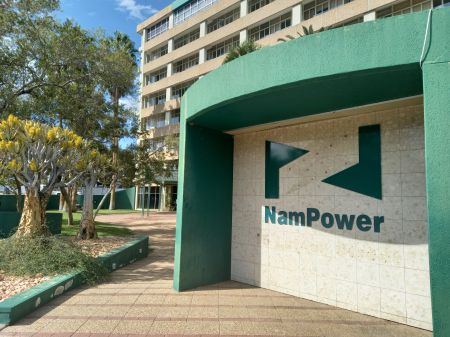






Photo: Patricia Coetzee (NAMPA)
By: Staff Reporter
NamPower intends to make digitalisation a central part of its transformation over the next five years, according to its Integrated Strategic Business Plan (ISBP) for 2026–2030.
It indicated that it will be using artificial intelligence, automation, smart-grid technologies, and better use of data to improve everything from electricity trading and maintenance to customer service.
Utilising digitalisation, automation, and AI-based system upgrades offer potential for better cost and risk management.
NamPower owns a transmission network of 66 kV to 400 kV power lines spanning a distance of more than 13,000 km.
NamPower identified technology and digitalisation as one of the critical areas requiring attention as Namibia’s electricity market becomes increasingly complex and competitive.
The power utility acknowledged that despite progress, insufficient digitalisation and automation are slowing the modernisation of both service delivery and internal processes.
Smart grid technologies and digital infrastructure remain underutilised, limiting its ability to exercise real-time control and make decisions based on data.
This comes as Namibia’s electricity industry undergoes significant changes, including increased renewable-energy generation, growing participation by independent power producers and the liberalisation of the electricity market.
For NamPower, digital transformation is therefore not simply about upgrading its IT systems. The company sees technology as a tool for operating the national electricity system more efficiently while remaining competitive.
One of the biggest changes is expected to be in the management of the electricity grid.
NamPower says it is strengthening its infrastructure through smart-grid technologies capable of enabling real-time monitoring, automated control and more effective demand response across the electricity network.
The utility also plans to introduce AI-driven dispatch optimisation, grid automation and digital supervision, while implementing automated systems for predictive maintenance of generation and transmission infrastructure.
Instead of relying on scheduled maintenance or reacting after equipment fails, AI and machine-learning systems could help NamPower analyse equipment data to predict potential failures and optimise maintenance schedules.
The plan specifically lists the use of AI and machine learning to predict equipment failures and integrate forecasting systems among organisation-wide initiatives planned under its innovation and process-efficiency objective.
NamPower says it wants real-time data processing and advanced analytics to support decision-making, while integrated Management Information Systems and dashboards will be used to improve internal management.
Fragmented systems and the underutilisation of data for real-time operations and maintenance are weaknesses that the utility identified. NamPower described itself as having a strong technical foundation but says it is lagging in technology integration and the digitisation of internal workflows.
Electricity trading is another area where digitalisation could become increasingly important.
As Namibia’s electricity market becomes more liberalised and NamPower participates in regional electricity markets, the utility says optimal electricity trading will require system optimisation and automation. Data integration covering both customer demand and energy supply is identified as a critical requirement.
Digitalisation is also expected to change how customers interact with NamPower.
The company admits there are gaps in its customer-centric culture and Customer Relationship Management tools, while available customer data is underutilised for understanding customer behaviour and segmentation.
Its proposed response includes advanced CRM platforms and self-service applications, alongside more proactive resolution of customer faults and queries.
NamPower says its customer transformation will need to be supported by data-driven insights, digital interfaces and grid modernisation.
This becomes particularly significant as customers gain more options in the electricity market. NamPower notes that new IPPs and electricity traders are increasing customer choice and expectations, meaning the utility will increasingly have to compete through service, reliability and innovation.
Digitalisation will extend into NamPower’s internal administration as well.
The utility plans to redesign, digitise and automate key business processes, while expanding the use of digital platforms for enterprise resource planning, customer relationship management and asset management.
It aims to eliminate inefficient processes, increase productivity and reduce operating costs.
However, NamPower acknowledges that technology alone will not deliver the transformation.
Its assessment rates the implementation of innovation and new technologies as having “medium viability.” While the technology is available, NamPower says successful implementation will require focused manpower, resources, investment and change management.
The company also identifies workforce development as a major issue, saying future skills strategies will have to support the digital transition and technical innovation.
Technology adoption itself requires both capital expenditure and appropriately skilled employees.
Cybersecurity will consequently become more important as NamPower becomes more digitally connected.
The utility identified cybersecurity and system resilience as critical success factors for innovation and process efficiency and plans to invest in stronger cybersecurity frameworks to protect critical electricity infrastructure from cyber threats.
If successful, the transformation could move NamPower closer to its stated ambition of becoming a “world-class utility” offering innovative, sustainable and affordable electricity solutions.