

By: Hee-Dee Walenga
With around 71% of the country’s population being inactive, the Namibian government spends less than 1% on sport development.
This was stated during the official launch of the country’s sport profile research publication in Windhoek on Thursday at the Mercure Hotel.
The event took place under the theme, ” Evidence-Based Sport for National Development: NDP6 and Beyond.”
The Executive Director responsible for Youth, Sports, and National Service within MEIYSAC, Gerard Vries, highlighted why the launch of the report is necessary.
Vries said the country needs to face the uncomfortable truths of its outdated sport policies.
“Our sports policy dates back to 1993, the Sports Act dates back to 2003, and less than 1% of public expenditure is allocated to sports, our sports facilities are unevenly distributed and often dilapidated, while 71% of Namibians are inactive,” he stated.
He added that the sport governance structures and institutional arrangements that should drive our sports ecosystem are fragmented and lack clarity.
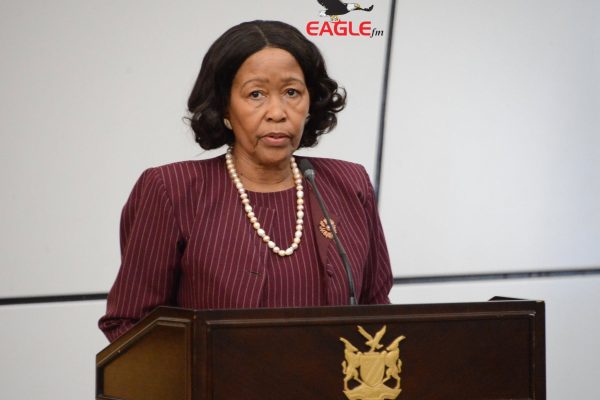
Sanet Steenkamp, the Minister of Sport, stated that thus far, Namibia’s sports industry has been driven by passion only.
“What has been missing is the insight and data to understand the ecosystem behind our victories and to learn fully from our setbacks. The country sport profile now gives us that insight. Data must become the foundation on which we build the future of Namibian sport,” Steenkamp said.
“I pray that this profile will not become another ‘referred to’ document, and we will see tangible results,” Steenkamp added.
The profile was authored by Irvine Ndjavera, Deputy Director for School Sports, with assistance from the following researchers: Simon P Uusiku, PE Part-Time Lecturer, Sofia Simon, former Secretary General of Netball Namibia, and Ndawana Haitembu, Athlete & Sport Management Honours Graduate at the University of Johannesburg.
The objectives of the research are to develop a comprehensive overview of sport for development policies, resources, networks and frameworks in selected African countries, to build local capacity of researchers through training and mentorship, and to generate evidence based resources to inform advocacy and strengthen policy and investment in sport for development.
Professor Marion Keim, from the University of the Western Cape, explained that the country profile was done as part of a larger continental research initiative by UNESCO regarding sport policy mapping that began in 2014 and included Kenya, South Africa, Mauritius, Ghana, Nigeria, Cameroon, The Gambia, DR Congo, and Senegal.
“If Namibia wants to collaborate on research on gender in sport, for example, with Senegal, then they can look at the individual country report,” Keim, who also serves as the UNESCO Chair for Sport, Development and Peace, explained.
All 54 African countries will have a profile in the next four years.
The research looked into the following areas: Sport & Health, Sport & Economic Development, Sport & the Environment, Sport, Education & Training, Sport policy, Governance & institutional arrangements, Demography of sport participants, Community and Youth Development in Sport, Sports and Social Development.
Selected Findings:
● Namibian sport has a structural problem. There is a need to clarify roles, modernise policy, strengthen governance, and improve investment and commercialisation strategies. For example, the Sports Act does not state the government’s role in sport, nor does it say anything about the sports federations and their athletes.
● Categorisation of sports codes: Namibia’s national sports codes are football, rugby, and netball. Athletics, cycling, boxing, wrestling, and para-athletics fall in the priority category. All other sporting codes fall in the development category. The categorisation gets reviewed every four years.
● Safe, fair, and inclusive sports system: 33.5% women in sport leadership positions, 17% of national bodies have child safeguarding policies, and only 5.5% of national bodies have disability safeguarding policies.
● Low youth employment in sport: only 0.7% of youth are employed in sport, recreation, and art (as per 2023 data)
● Physical education: 819,749 students across 1,964 schools in Namibia are slated to partake in physical education once a week, and is often repurposed of academic catch-up
● Inactive nation: 71% of Namibians are physically inactive, 88% of adolescent girls are inactive, the estimated annual direct cost of physical inactivity is N$313.9 million, and 1 in 5 Namibians are classified as obese.
The research will aid the government and private stakeholders with the information they need to achieve the sporting goals of the sixth national development plan.
heedee@eaglefm.com.na