
By: Dwight Links
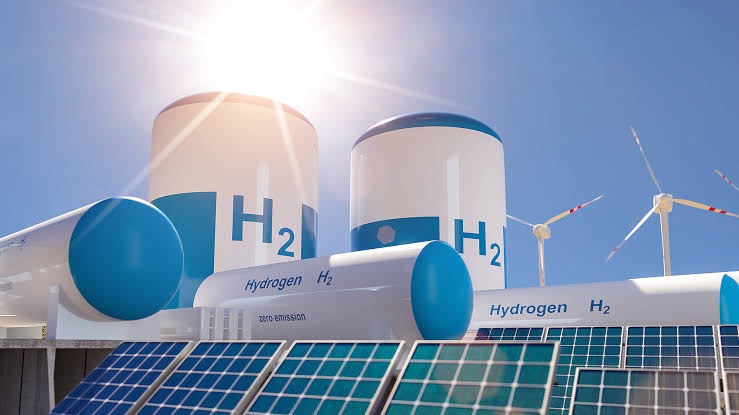
The latest Global Hydrogen Review by the International Energy Agency supports the idea that global hydrogen projects under development can help to diversify away from the realities of the current energy crisis.
“Diversification is a key element of energy security, and the way hydrogen and hydrogen-based fuels are produced, as well as their use, can play an important role,” the review noted.
The review document has inputs from the Clean Energy Ministerial (CEM), which is a high-level global forum to promote policies and programmes that advance clean energy technology.
According to them, the platform aims to share lessons and best practices, and to encourage the transition to a global clean energy economy. The review also had a unique chapter on Africa and its development timeline in the global hydrogen industry.
Today, Africa produces about 6 kilotonne(Kt) of low-emission hydrogen, mostly from electrolyser projects in South Africa (60 MW), Egypt (15 MW) and Namibia (12 MW).
Together with a project pipeline of 31 projects that could come online by 2030, low-emissions hydrogen production could reach 1.2 Megatonne (Mt), according to the International Energy Agency (IEA).
According to them, the top three countries – Egypt, Morocco and Namibia – account for more than 80% of this production, and electrolysis accounts for 100% of the low-emissions hydrogen production that could be online by 2030.
“Nearly two-thirds of these projects are in Giga Watt-scale. The project pipeline to 2030 adds up to 17 GW, leading to an average size of 560 megawatts, which would be difficult to bring to fruition in just four years,” the review noted.
THE DEMAND QUESTION
The IEA identifies that hydrogen demand in Africa reached 3.1 Mt in 2024, up from 1.8 Mt in 2012.
“Nearly all the demand comes from just six countries. Egypt alone represents half of the regional demand, followed by Algeria (20%), Nigeria (17%), South Africa (5%), Libya (5%) and Equatorial Guinea (3%),” the IEA highlights on the current demand picture.
Meanwhile, 87 ammonia production sites accounted for nearly three-quarters of hydrogen demand, which is followed by refining with 13%.
“All the countries with demand from refining, except for Egypt, had a relatively small demand, at less than 100 kt per year, which would not be enough to achieve economies of scale in production,” the review states.
The review notes that in the past decade, Nigeria expanded its hydrogen use by almost eleven times while Algeria grew theirs by nearly four times.
In contrast, Morocco has lost the small production capacity in refining that it once had, and demand in South Africa has fallen by a third, driven mainly by declining demand in steel.
In terms of infrastructure, Africa has 13 ammonia terminals, of which only four are in sub-Saharan Africa. In this picture, the means of producing hydrogen and ammonia are also noted, what processes were used, and whether they formed part of a green transition or not.
“Nearly 90% of the demand in 2024 was satisfied with hydrogen produced from natural gas, 3% was produced from coal and the rest was from industrial by-products. At a regional level, hydrogen production accounted for 6% of the gas demand in 2024 and 2% of regional energy-related carbon dioxide emissions,” the review points to.
CONTINENTAL STRATEGIES
The IEA notes that eight African countries – accounting for nearly three-quarters of the current regional hydrogen demand – have a hydrogen strategy in place.
Morocco (2021), Namibia (2022), Algeria (2023), Kenya (2023), Mauritania (2023), South Africa (2023), Tunisia (2024) and Egypt (2024) are so far the only ones.
The review notes that at a regional level, there is only one strategy joining a collection of nations together.
“There is one strategy at the regional level from the Economic Community of West African States (2023),” it says.
On the topic of certification, only Kenya has defined sustainability criteria which includes Green House Gas thresholds) for hydrogen and ammonia production.
According to the hydrogen-related United Nations Framework Convention on Climate Change (UNFCCC) Conference of the Parties (COP) initiatives, 33 countries – representing 54% of the current regional renewable capacity – endorsed the target of tripling renewables by 2030.
Only six on a continental level signed the Declaration of Intent from COP28 for mutual recognition of certification schemes. Seven countries, with no hydrogen demand, signed the Hydrogen Declaration from COP29.
Namibia’s strategy depicts a long-term vision centred around the development of three renewable hydrogen valleys – also termed as phases – across the country.
“Despite not having any hydrogen demand today, the ambition of the strategy is to produce 1-2 Mt of renewable hydrogen in 2030, ramping up to 10-15 Mt in 2050, driven by ammonia, synthetic fuels and iron exports,” the IEA says.
This would require an electrolyser capacity of 10 GW by 2030, increasing to 128 GW by 2050. As reference, the total installed generation capacity in Namibia was less than 700 MW in 2024.
The review points out that production cost estimates are ambitious, as Namibia aims to reach a minimum of US$ 1.2-1.3/kg by 2030 and less than US$ 1/kg by 2050.
“Fulfilling this vision could increase GDP by 30% in the 2030-40 period, creating 280 000 jobs in 2030 and 600 000 in 2040. The strategy defined 12 actions to be completed by March 2025 on setting up the operational structure within the government and the country, mobilisation of finance and local ecosystems and inclusive development,” the review highlights.
They note that this includes enacting the Synthetic Fuels Act, although as of early June 2026 this is not yet in place.
The targets were confirmed in late 2025 in the National Development Plan, which included 1.3 Mt of ammonia and 2 Mt of hydrogen-based iron by 2030.