

By: Peneyambeko Jonas
Namibia has intensified its drive to attract Chinese investment as it positions itself to become a regional centre for green industrialisation, using its renewable energy resources, critical minerals and strategic location.
The country is seeking to improve efforts to move beyond an economy built largely on raw commodity exports.
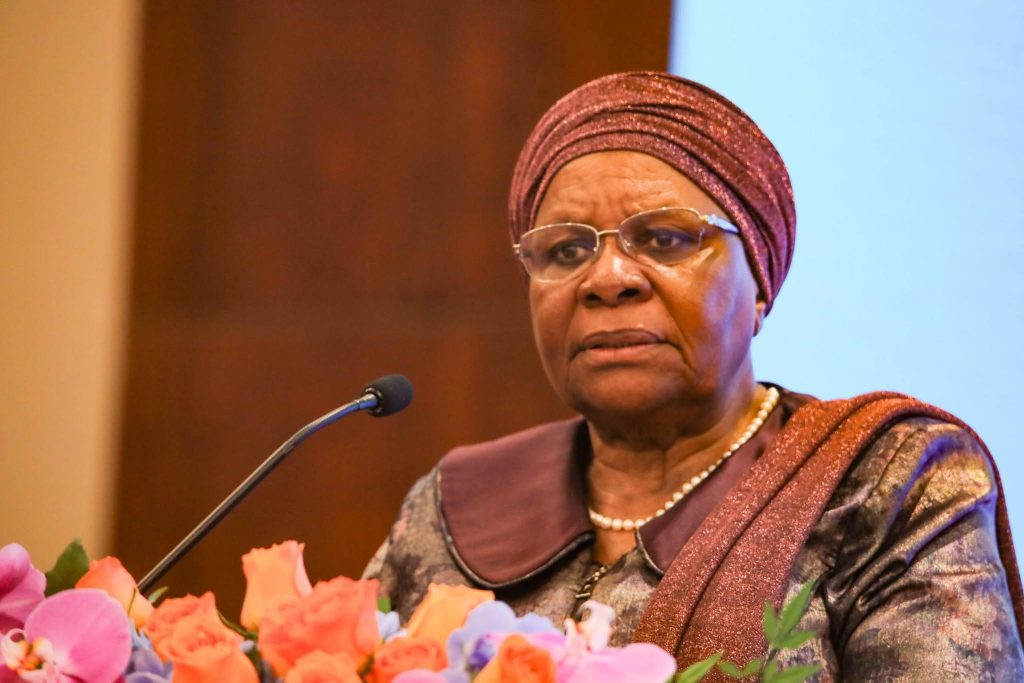
Green industrialisation dominated the Namibia–China Business Forum in Shanghai on Monday, where more than 300 business leaders from both countries gathered on the sidelines of President Netumbo Nandi-Ndaitwah’s State Visit to China to deepen commercial ties.
Speaking about Namibia’s economic priorities, the President said the country wants partnerships that support industrial development rather than simple resource extraction.
“We want to move beyond exporting raw materials. Our objective is to build industries that create jobs, develop skills and ensure that more value is added within Namibia,” President Nandi-Ndaitwah said, while encouraging Chinese companies to invest in manufacturing and value addition.
The President’s message aligns with government’s long-term industrialisation agenda, which seeks to expand local production, create skilled employment and strengthen Namibia’s participation in regional and global value chains.
Addressing investors, Minister of International Relations and Trade, Ambassador Selma Ashipala-Musavyi, said Namibia is positioning itself to benefit from the global transition towards cleaner energy while creating industries that generate employment and increase domestic value addition.
“The world is looking for green hydrogen, and Namibia is looking at the sun. We have some of the highest levels of solar radiation and strongest winds on the planet,” she said.
She told investors that Namibia’s flagship Tsau //Khaeb Green Hydrogen Project is already attracting billions of dollars in investment and represents a shift towards new manufacturing industries powered by renewable energy.
“We aim not only to export energy, but to plan, develop and export a new paradigm of clean manufacturing, including green ammonia, sustainable aviation fuel and green steel,” Ashipala-Musavyi said.
Her remarks reflect the government’s broader strategy to diversify the economy by developing industries that process natural resources locally instead of relying primarily on the export of raw materials.
Ashipala-Musavyi also promoted Namibia’s mineral sector, noting that the global growth of electric vehicles has increased demand for lithium, copper and rare earth minerals found in the country.
Rather than exporting these resources in their raw form, she encouraged investors to establish processing facilities in Namibia.
“We are moving beyond the ‘extract and ship’ model,” she said.
She further highlighted the Port of Walvis Bay as one of Namibia’s strategic economic assets, saying it provides efficient access to markets across the Southern African Development Community.
“When you invest in Namibia, you are not investing in a market of over three million people. You are investing in a market of over 300 million consumers across the SADC region,” she said.
Beyond renewable energy and mining, the minister identified infrastructure, agriculture, fisheries, logistics, aviation, education, health, housing and digital commerce as sectors offering investment opportunities.
She added that government is simplifying administrative processes through digital visa systems, streamlined land access and reduced regulatory procedures to improve the investment climate.
China has also indicated its willingness to deepen economic cooperation with Namibia.
Ahead of the State Visit, Chinese Foreign Ministry spokesperson Guo Jiakun described Namibia as China’s “comprehensive strategic cooperative partner” and said the relationship has produced “fruitful cooperation for mutual benefit.”
Guo said China looks forward to using the visit to “carry forward our traditional friendship, deepen political mutual trust, expand mutually beneficial cooperation and elevate the comprehensive strategic cooperative partnership to a new level.”
Those remarks signal Beijing’s continued interest in expanding cooperation with Namibia at a time when African countries are seeking greater foreign investment in renewable energy, infrastructure and manufacturing.
As discussions continue during the State Visit, the focus has shifted from simply attracting capital to securing investments that build industries, transfer skills and create higher-value exports.
For Namibia, the success of these engagements will ultimately be measured not only by investment commitments, but by their contribution to economic diversification, industrial development and sustainable job creation.