

By: Nghiinomenwa-vali Hangala
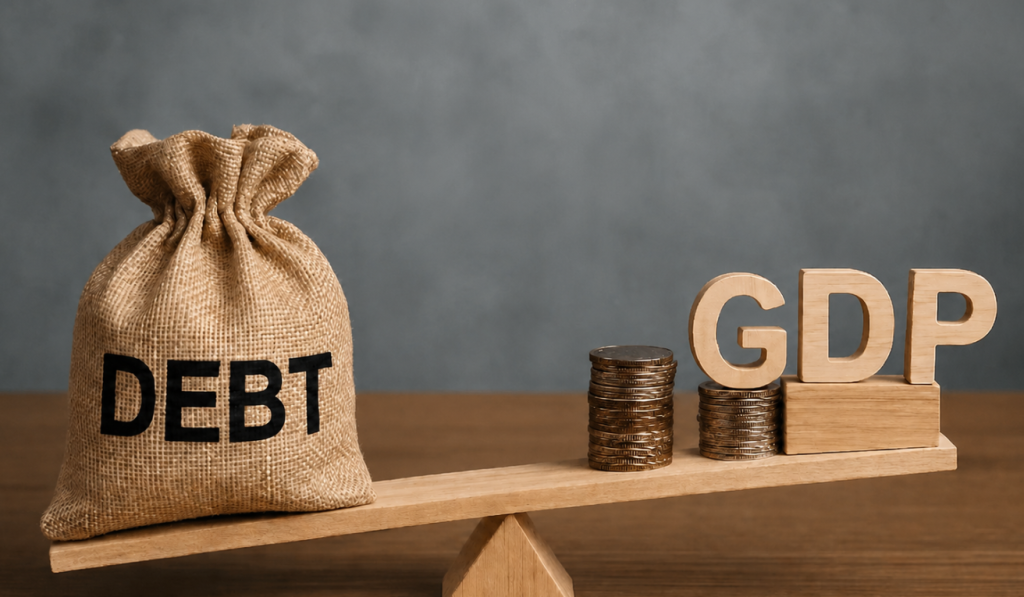
Total government debt (foreign and domestic) stood at N$178.4 billion at the end of March 2026. At this level, it is more than the country’s Real Gross Domestic Product (GDP) of 2025.
Namibia’s debt is N$18 billion more than the country’s real GDP (2025).
The total government debt represents the amount of money borrowed from domestic and foreign markets (investors) over the years.
The money is borrowed to fill the shortfall between revenue collection and budget expenditure over the years.
This is premised on economic growth (the goods and services that the country produces each year), which also determines the taxes to be collected.
Real Gross Domestic Product (GDP) is the measure of the value added created through the production of goods and services in a country during a certain period, where the production over time is adjusted for price changes.
According to the Bank of Namibia’s first quarterly report of 2026, the Namibian government has accumulated N$178.4 billion in debt as of the end of the first quarter.
Most of the government debt is borrowed from the domestic markets, standing at N$158.9 billion as of the end of March 2026.
It has accumulated N$19.4 billion in foreign debts. The government’s borrowing is premised on the growth of the economy and its size.
Namibia’s real GDP, according to the National Accounts for 2025, stands at N$160.1 billion and is estimated to grow to N$166.4 billion for 2026.
Put against the country’s accumulated debt, it shows that the country owes more than the value of its entire economy (at constant prices).
The country’s annual output for last year is N$18.3 billion less than the country’s debt level. The 2026 estimated Real GDP also does not match or exceed the accumulated debt.
According to the quarterly report, going forward, the total debt stock is anticipated to rise this financial year to N$193.7 billion during 2026/27 and further to N$217.3 billion by FY2028/29, increasing faster than the country’s real GDP.
For this year, Namibia’s economy is estimated to grow to N$166.4 billion.
As a result of the accumulated debt, the country divides its domestic revenue between its budgetary promises and servicing the debt.
The quarterly report shows that the total debt service increased both on a yearly basis and on a quarterly basis during the fourth quarter of FY2025/26.
Debt servicing for the central government increased by N$550 million year-on-year to N$5 billion during the quarter under review. The increase was reflected in domestic debt service, which rose by 22% every year, in line with the rise in domestic debt.
Moreover, every quarter, total government debt servicing decreased by N$12.1 billion compared to the previous quarter, owing mainly to base effects as a result of the redemption of the Eurobond.
As a percentage of government revenue, total debt service stood at 5.7%, reflecting a quarterly decrease of 18.8 percentage points, while it increased by 0.7 percentage points every year respectively in the quarter under review.
erastus@thevillager.com.na