


By: Arminda Hepute
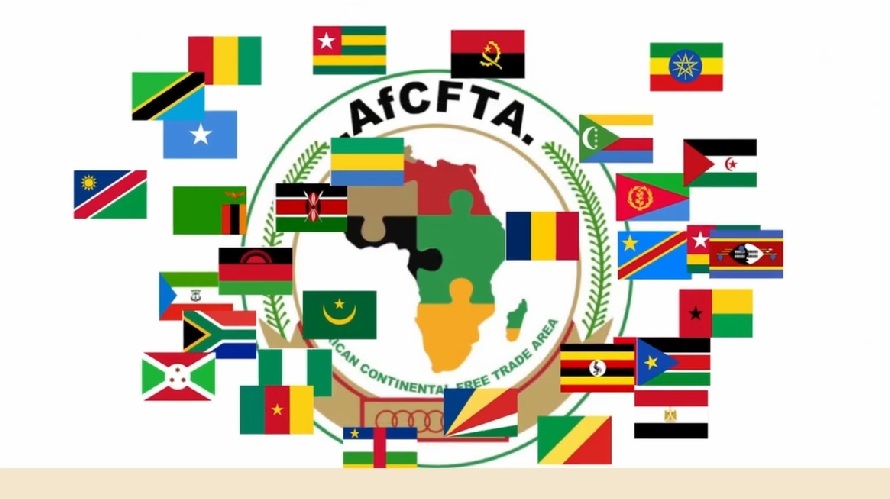
Over the past four years, the vision of the African Continental Free Trade Area (AfCFTA) has grown stronger and more influential across the continent.
African leaders are increasingly recognising the importance of sharing technical expertise, strengthening regional cooperation, and producing finished goods within Africa rather than exporting raw materials abroad.
From investments in oil and gold refining to renewable energy and artificial intelligence, Africa is steadily shaping a future driven by innovation, self-reliance, and economic transformation. As this continental movement gains momentum, an important question arises: what role should Namibian youth play in this new African chapter, and how can we prepare ourselves to fully participate in the future of the AfCFTA?
As a Namibian youth leader living abroad, I often reflect on why so few young Namibians pursue opportunities in regional, continental, and international affairs. I also find myself questioning how I, a marginalised young person from Namibia, managed to overcome numerous obstacles and find my place in youth diplomacy.
The answer, I believe, lies in three powerful elements: access to information, motivation, and the courage to seize opportunities. Many young people possess the talent and potential to succeed, yet too often they are held back not by lack of ability, but by limited exposure, self-doubt, and fear of stepping into unfamiliar spaces.
I am encouraged to write this article to raise thought-provoking questions, with the hope of awakening Namibian youth to take charge of economic diplomacy and represent our country.
If one of the driving ambitions of the African Union (AU) is to fully integrate Africa’s 1.4 billion people into the AfCFTA, how can young Namibian people be included in this future and take charge of their own destiny?
If Namibia is more than 35 years into independence, it means that we can no longer blame our elders for the opportunities that we do not have. When I look at the Namibian parliament today, the impression I get is that the post-colonial Namibian youth are in a position to influence and make Namibia an economic hub and a land of opportunities.
If we have done that in domestic politics, what is limiting Namibian youth to dominate the SADC Youth Forum, AU Youth Programmes and global scholarships? If the first generation of Namibian liberation is advocating for the restructuring of the international financial architectures and African representation in the United Nations Security Council, who will represent us in those spaces if youth are untrained and not exposed?
I am always touched when I read the report by the Namibia Statistics Agency (2023), which shows that the youth unemployment rate in Namibia is about 44.1%–44.7%, with overall unemployment placing Namibia among the highest in the SADC region.
It is therefore crucial to note that the Namibian economy continues to be unable to provide opportunities for all of us. As a result, we need to grow our diplomatic wings and seek genuine opportunities beyond the country.
If the AfCFTA wants to ensure that trade across the continent is truly free, the question we should ask is: what will our role be, who will facilitate trade, and how will we lead emerging industries? If we do not address these questions, we will not be able to solve our problems.
Namibia’s Advantage
One of the things that accelerate development is youth diplomacy. What we can learn from countries like China and the USA is exposing their youth generation to the world in order to seek knowledge and come back home to implement.
What these countries achieved in developments can prove that youth diplomacy is better than professional benchmarking, since it allows youth to learn fast and be able to replicate what they learned outside and bring knowledge back home.
Namibia’s advantage is now in education and training. I have seen many Namibian graduates with honours degrees, masters and even doctorates. However, many of them still want to follow the traditional method of public sector work or climbing a corporate ladder.
Even if the two options are ideal, one will note that if we all think that way, there is no one who will assist us to innovate and bring about new approaches to development, and indeed to the realisation of the AfCFTA.
If we want to expand the Namibian economy by leveraging the AfCFTA, we must stop thinking domestically but internationally and become global citizens.
The young, vibrant, and educated Namibians shall populate Africa through continental opportunities, take up positions in international institutions, and refine the Namibian trade and economic agenda for the good of all Namibians.
If a young lady from Opuwo with limited opportunities can do it, Namibian youth can also do it. They just need to believe in themselves and take action. Africa’s continental integration is the way to go.
Arminda Hepute is a Namibian youth diplomat based in the United Kingdom. She is a graduate of the Konrad Adenauer Stiftung Talent Empowerment Programme and holds certification in community counselling. Her professional interests focus on youth development and diplomacy.