



By: Dwight Links
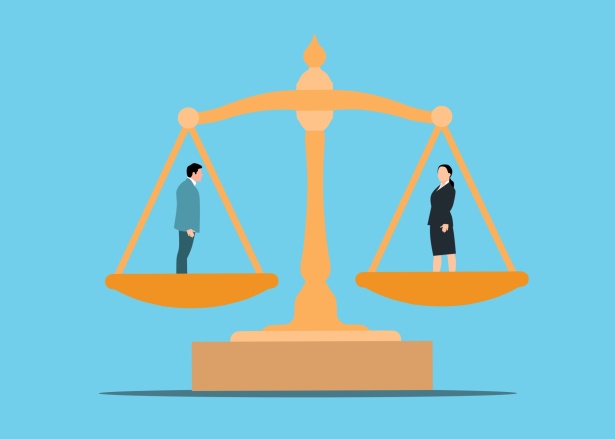
The recent Universal Periodic Review of Namibia saw a Namibian delegation in Geneva share that the nation had developed and is currently implementing the Third National Gender Equality and Equity Policy.
The policy is set to run from 2025 to 2035.
Namibia’s fourth cycle review of its National Report to the UN stated that this policy specifically addresses gender equality in the country.
“To address gender inequality, the Government developed the third National Gender Equality and Equity Policy (NGEEP) 2025-2035. [Which is] a policy based on Article 10 of the Namibian Constitution,” reads the report.
Very little was known of this policy, which was launched on 19 January 2026, until the review before the Human Rights Council in Geneva, Switzerland.
Ins & Outs of the Policy
The Namibian delegation, led by Justice Minister Fillemon Immanuel, presented the policy as a foundational starting point.
“Article 10 of the Namibian Constitution states that ‘All persons shall be equal before the law. (2) No persons may be discriminated against on the grounds of sex, race, colour, ethnic origin, religion, creed or social or economic status,” the report outlined.
The third NGEEP is also aligned to the provisions of various regional and global commitments on gender equality.
“It involved desktop reviews and various consultations at national and regional levels with OMAs and various other stakeholders from the public sector to NGOs,” said the Ministry of Gender.
The delegation also made mention of garnering added feedback through public engagement on the goals of the policy.
Gains & Issues
According to the ministry, a picture of mixed results was observed when they reviewed the previous policy.
“[It was] established that gender equality gains have been made over the past 10 years in Namibia in some focus areas such as education, maternal and infant mortality, financial inclusion, and female representation in the National Assembly, Local Authority Councils, Judiciary, Cabinet, media houses and security sector,” the ministry explained.
The opposite is a different reality. Many areas still have challenges as the review displayed the household and other societal realms as problem areas for gender impact to manifest.
“Despite this progress, significant gender inequalities persist in the areas of family relations, harmful norms and practices, feminisation of poverty, access to land and economic resources, access to education, health outcomes such as maternal and child mortality, and leadership and political participation among other areas where women continue to be disproportionally negatively impacted and under-represented,” cites the policy.
Aims
The goals are direct and speak towards real-world issues such as violence in societies and education disparities that are still prevalent.
“The policy objective is to ‘reduce poverty in all its multi-dimensional forms and improve the quality of education and training and achieve gender parity and equity at all levels,” the policy notes.
The policy adds that “it also aims to promote the health status of all Namibians, to reduce the prevalence and eradicate all forms of GBV, Violence Against Children (VAC) and Trafficking in Persons (TIP).”
Another aim would be to provide comprehensive, multi-sectoral GBV services to all survivors. And, that the policy strives to ensure efficient and effective prevention, response and support services on violence against children.
While the last goal endeavours to improve equal and equitable access to economic empowerment training, opportunities, markets and productive resources.
During the period under review, it was noted that Namibia co-facilitated the Summit of the Future; participated in the Human Rights 75 High Level Event; participated in the case of Obligations of States in Respect of Climate Change; and hosted the 25th Anniversary of the United Nations Security Council Resolution 1325 on Women, Peace and Security.
Namibia continues to implement the National Plan of Action on Women Peace and Security 2019-2024 (under review) and the National Gender Equality and Equity Policy for 2025-2035.