





By: Peneyambeko Jonas
Women under the umbrella of the Namibia Rural Women’s Assembly (NRWA) are leading a growing movement to promote organic farming and the use of traditional seeds, saying natural farming methods are healthier, environmentally friendly and economically beneficial for rural communities.
The women, drawn from different regions across Namibia, are encouraging communities to move away from artificial fertilisers and commercially produced seeds, which they believe negatively affect both human health and agricultural products.
NRWA Chairlady, Elizabeth Amutenya, said the idea of promoting organic farming grew after she attended agricultural training in South Africa and later conducted surveys among local women farmers.
According to Amutenya, the findings revealed that many African women still possess valuable indigenous knowledge about traditional farming methods and natural seed preservation.
She explained that the organisation encourages women to use organic seeds and natural fertilisers in order to improve crop quality and protect consumers from harmful chemicals often linked to artificial farming products.
“We realised that as African women, we need to return to natural seeds and organic farming practices that produce healthy crops and good harvests,” said Amutenya.
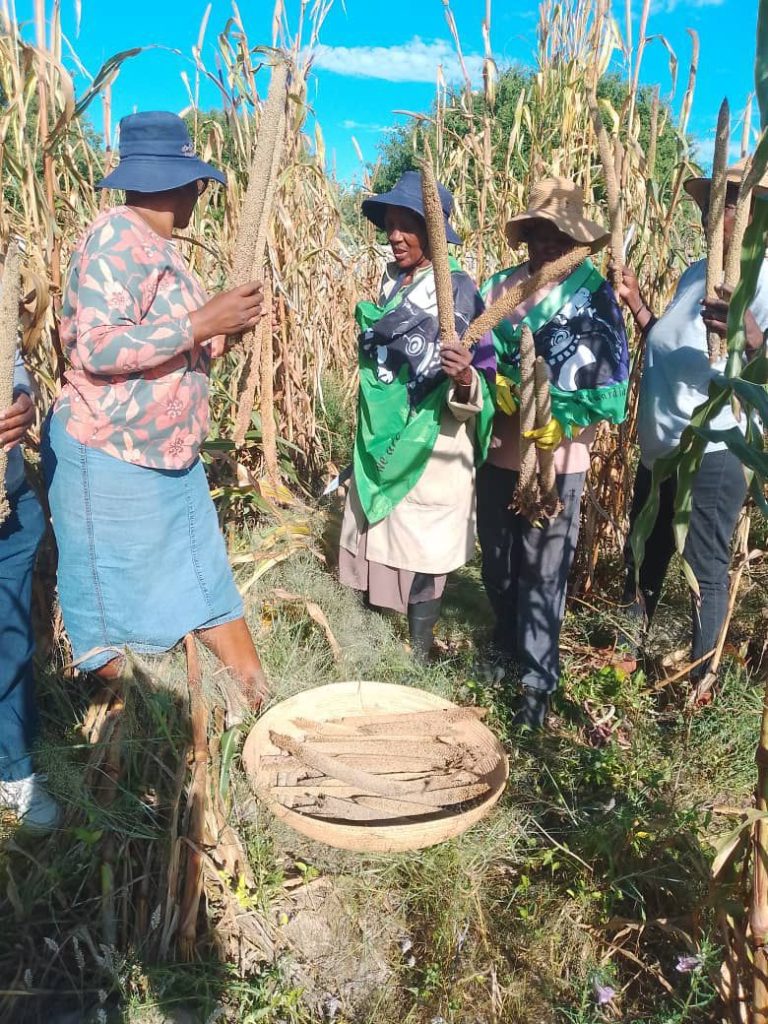
In the Oshana Region, farmers under the NRWA have already started cultivating crops such as mahangu, sorghum, beans and nuts on communal farmland. The initiative is viewed as a pilot project that could later be expanded to all 14 regions of the country.
Village leader and farmer, Peelolyetu Shitemba, described the project as a source of hope for many women in rural communities.
Shitemba said it is the first time that women in the organisation are farming collectively on such a scale, adding that the experience has inspired them to continue agricultural activities throughout the year.
She stressed that rural women are capable of becoming self-sufficient farmers, granted they are provided with the necessary support and opportunities.
She noted that after harvesting mahangu, beans and nuts, the remaining crop residue will be reused as organic fertiliser to enrich the soil before vegetables are planted.
According to Shitemba, crop rotation is one of the important methods the women practice to maintain soil nutrients and improve productivity.
“We do not want to wait for next year before farming. After harvesting, we want to continue with vegetable production so that the land remains productive throughout the year,” she indicated.
Despite the progress made, access to water remains one of the biggest challenges facing the farmers in Oshana.
Shitemba said the lack of proper irrigation infrastructure may affect plans to expand vegetable farming after the current harvest season.
She appealed to government authorities and other stakeholders to assist rural women with boreholes and water-dripping systems to ensure sustainable agricultural production.
“Without water, it will be difficult for us to continue vegetable farming after harvesting mahangu,” she explained.
Meanwhile, Emilia Nyau, who also serves as NRWA Chairwoman in the Oshikoto Region and as a NAMBA Traditional Seed Coordinator, highlighted the economic opportunities linked to natural products and indigenous resources.
Nyau said women in Oshikoto are involved not only in crop farming, but also in projects such as marula oil production and oombeke oil manufacturing for hair products.
According to her, these projects have generated much-needed income that has helped several women support their households and families.
She also highlighted the importance of training women on the use of traditional seeds and organic fertilisers, saying this contributes positively to people’s health and environmental protection.
Nyau recalled an incident where a batch of marula oil intended for export to United States failed quality testing after traces of poisonous substances were reportedly detected during processing.
She believes the contamination may have originated from artificial fertilisers used in farming areas.
The failed export deal, she stated, served as a wake-up call for many women involved in natural product production.
The women also stressed the importance of understanding soil conditions and land suitability before planting crops.
Shitemba encouraged farmers to study their fields carefully in order to determine which areas are best suited for crops such as watermelons, mahangu, beans and nuts.
She warned that poor land planning often results in disappointing harvests and avoidable complaints from farmers.
Amutenya added that climate change has transformed farming conditions over the years, making it necessary for farmers to continuously learn and adapt.
She urged women not to rely solely on outdated methods, but instead work together to discover better and healthier ways of farming.
“Our environment has changed because of climate change, and we also need to change how we farm. Women must come together, learn from one another and improve their farming methods,” she encouraged.
Through their growing organic farming movement, NRWA women hope to build healthier communities, protect indigenous seeds and create sustainable livelihoods for future generations.