



By: Nghiinomenwa-vali Hangala
The Namibia Green Hydrogen Programme has revealed that following its call for project proposals last year, it has received 148 submissions from Namibian entities operating across the green industrialisation value chain.
According to the Programme’s update shared this week, 77 of the submitted proposals align with requirements set by the Climate Investment Fund (CIF).
The eligible sectors are the hard-to-abate industries, with the primary focus being on Cement & Concrete, Iron & Steel; Chemicals & Fertilisers; Zero-emission Shipping; Ferrous & Non-ferrous Metals; Glass & Ceramics; and Clean Tech Supply Chains.
The Programme noted that the proposals extend far beyond hydrogen production.
They include initiatives aimed at decarbonising the transport sector, producing green chemicals and fertilisers and local manufacturing of renewable energy components and infrastructure.
The eligible submissions are grouped across five thematic clusters, which according to the Programme reflect the breadth and transformative nature of Namibia’s green industrialisation potential.
Cluster One is for clean energy & industrial power anchors requiring large private capital and holding potential to establish new industrial sectors for Namibia.
Some of the eligible proposals under this cluster are from the HyIron-Oshivela Green Iron Project, EON Hydro Namibia/Geo Hydro Energy Group, Cleanergy Solutions Namibia and Hyphen Hydrogen Energy.
Cluster Two is for enabling infrastructure: grid, storage & system integration that can unlock downstream industrial decarbonisation and export infrastructure investments.
Some of the projects under this cluster are from Amperra (EV charging infrastructure), ColdRoads Namibia (carboncor asphalt), Hy-ON (electrolyser/BOP assembly) and Renewstable Swakopmund (HDF Energy).
The Third Cluster includes industrial system decarbonisation and value addition projects that can strengthen domestic processing of critical minerals with clean energy supply chains.
Eligible projects under this cluster were from companies such as GREEM (rare earth value addition -Phase 2), Adoni Trading (hydrogen-powered generators), Tweshipewa (non-ferrous metals refining), and Green Metals Refining (manganese sulfate).
Cluster Four is for projects focused on circular economy & low-carbon manufacturing by developing a broader domestic industrial base using circular manufacturing and import substitution approaches.
Submitted projects came from Green Brine Tech (chloro-alkali production); Namib Industry Ceramics (low-carbon ceramics); Desert Paper Co. (carbon-neutral paper Mill); and ONESI Brick (low-carbon brick manufacturing).
The last cluster is Bioeconomy, Agriculture & Climate Innovation, which contains projects aiming to integrate renewable energy with agriculture, forestry and marine value chains.
Project proposals received under this cluster came from companies like Daures Green Hydrogen Village, Oryx BioEnergy (bio-methanol/e-methanol), MGH Energy (e-fuels Namibia) and Sun Prosper Energy (Walvis Bay Zero-Carbon Park).
The Programme, with its partner advisor, indicated that it has held roundtable discussions with project representatives across all clusters, with continued engagements to follow.
This process includes four stages.
First is to engage project developers to collect key information about their plans, investment readiness and impact.
Secondly, assess bankability by reviewing whether a project is ready for investment and flag what is still missing.
The third stage is to identify gaps by mapping technical, commercial, financial, and regulatory blockers that could slow progress.
Lastly, to design interventions by recommending the most effective financing tools to close gaps.
The Programme noted that their mandate is to act as a neutral, transaction-oriented advisor, supporting the government and its partners in drafting the Investment Plan.
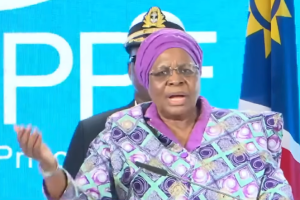
Interim Head of the Namibia Green Hydrogen Programme, Joseph Mukendwa, confirmed the process at the Sectoral Transformation Investment Plan Stakeholder Engagement this week.
Mukendwa said they are working closely with their transaction advisors, having already begun the process of evaluating and refining these proposals.
“The goal is to develop a robust pipeline of bankable projects that will form part of the Sectoral Transformation Investment Plan (STIP),” he said.